


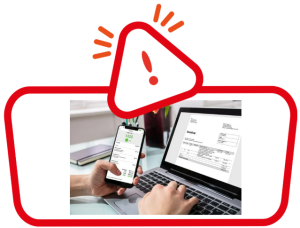
It is becoming more and more common to receive all types of financial information (requests, invoices, receipts or vouchers) by e-mail instead of by post.
Within this digital activity, the risk of receiving false payment documents has become a reality. In this case, cybercriminals impersonate the identity of a legitimate supplier (telephony, supplies, collaborations, subscriptions, online purchases, etc.), of a bank (debts, account overdrafts, unpaid charges, etc.) or of public administrations and authorities (fines, penalties, taxes, fees, etc.).
How can we detect this type of scams?
-
- We do not have a contractual or collaborative relationship with the company or entity from which the document is notified to us.
- We do not associate the payment referred to on the receipt or invoice with any transactionWe do not associate the payment to which the receipt or invoice refers with any transaction, amount or request pending payment.
- The amount indicated does not correspond with the usual amount of payment or with the agreed price for the product or service.
- The format or content of the document is different from the standard we may have received on previous occasions.
- Follow our instinct and when in doubt confirm the validity of the document and the amounts by other means (contact telephone, official e-mail, website, application, etc.).
IMPORTANT NOTE: If all indications are that this is a scam, we recommend in the professional environment to request support from the IT Department, the Security Manager or the direct superior. And if we have fallen into the trap and have transferred money by any means at a personal level, report it as soon as possible to the police authorities.
*Shipment date: May 12, 2025