


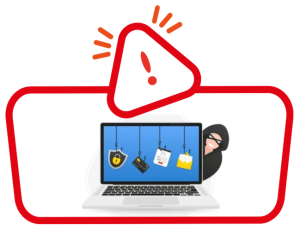
Fraudulent e-mails are one of the most used cyber-attack techniques nowadays, with more than 90% of success in obtaining confidential information or payment data. You will probably know this type of fraud as “Phishing”. This word derives from the English word “fishing” and is always related to the active capture of data.
The cybercriminal sends randomly to different users, professionals and individuals, false or scam communications by e-mail. In these communications, the most common is to impersonate the identity of a trusted contact, either someone close (boss, relative, friend) or an important entity (bank, public administration, insurance company, utility company).
It may also be related to fake login verification on platforms (e.g. Amazon, Facebook, Netflix, etc.) or password change requests. This is done so that the user who receives the e-mail does not suspect that it is false and makes a mistake such as downloading a file, clicking on a link, providing data or logging in through a fake web page.
This in turn can lead to the camouflaged installation of a virus or malware, i.e. malicious software that damages the computer and information, or to the collection of contacts, passwords and any other data the cybercriminal wants to access.
How can we avoid this?
- The golden rule remains to be wary of any unusual communication and to “double check”. To find out for sure, we should contact the supposed sender (our boss, relative, bank, etc.) by other official means, to ask if the e-mail received is real.
- Do not do anything requested until you have checked the above. This means not downloading files or images, not clicking on links and much less entering personal data or passwords on the linked web pages.
- We can check the links without clicking on them and thus avoid entering data on a fake web page. This can be done by moving the mouse over the link, as we say, without clicking directly. By doing this, you will see that a message will appear with the original name of the website to which the link redirects and you will be able to check if it is an official website or a fraudulent website.
- If you are suspicious about the content of a communication, do not reply to the e-mail. This could put the cybercriminal on alert and he could use other alternative means to trick us again (such as Vishing, fraudulent phone calls or Smishing, fake text or Whatsapp messages).
- Do not simply omit or delete it. If we have checked the above and in any of the points we have detected the falsity of the communication, we should not simply eliminate it. We have to notify this incident to the IT support team at work, and at personal level to the technological provider of the e-mail service (Microsoft, Google, etc.), so that they can analyze it, solve it and we can continue using this service with total security, both for us and for any other Users.